
A love letter to brilliant cinema that permits your mind to shut off.

I’ve found it difficult to write lately. I haven’t written to you as often as I’d like, partly because I’ve been going through personal experiences that have left me physically and mentally drained. How do I write to encourage you when I don’t feel encouraged myself? How do I write to give you clarity when I can’t find my own way?
So today, I’d like to take a different turn and write about something I’ve been thinking about.
I’ve been exploring the strange, almost inexplicable appeal of liminal spaces and the eerie feeling they evoke. I find liminal spaces oddly comforting and alluring, particularly in recent months as I’ve navigated my own experiences with burnout and disillusionment.
I’ve always loved the horror genre. As a kid, I loved watching horror cartoons. Some of my favorites were Courage the Cowardly Dog, Scooby-Doo, and Grim & Evil.
As an adult, I feel a deep nostalgia for these cartoons, which I think have influenced my taste in horror movies. It’s rare to find a horror movie that I don’t enjoy, even the low-budget campy horror movies that require you to suspend not only disbelief but basic logical reasoning. I love it all.
This year, I began to notice a pattern in the kind of horror I gravitated toward. For example, I kept rewatching the earlier seasons of The Walking Dead. TWD seasons 1-5 do a great job depicting a desolate world where everything has come to a standstill. Society as we know it is no more, and it’s all about survival. Human interactions are sparse; every building, road, and house is abandoned, and so the backdrop of every scene is by default uncanny and liminal.
Whenever I felt overwhelmed or burnt out, I’d put it on, and my heart rate would steady, and my nerves would calm down. I saw the show years ago when it aired, but rewatching it at this stage of my life, I found a new quality to it and formed a new interpretation of the material. I didn’t watch in anticipation as the plot progressed — I already knew what happened.
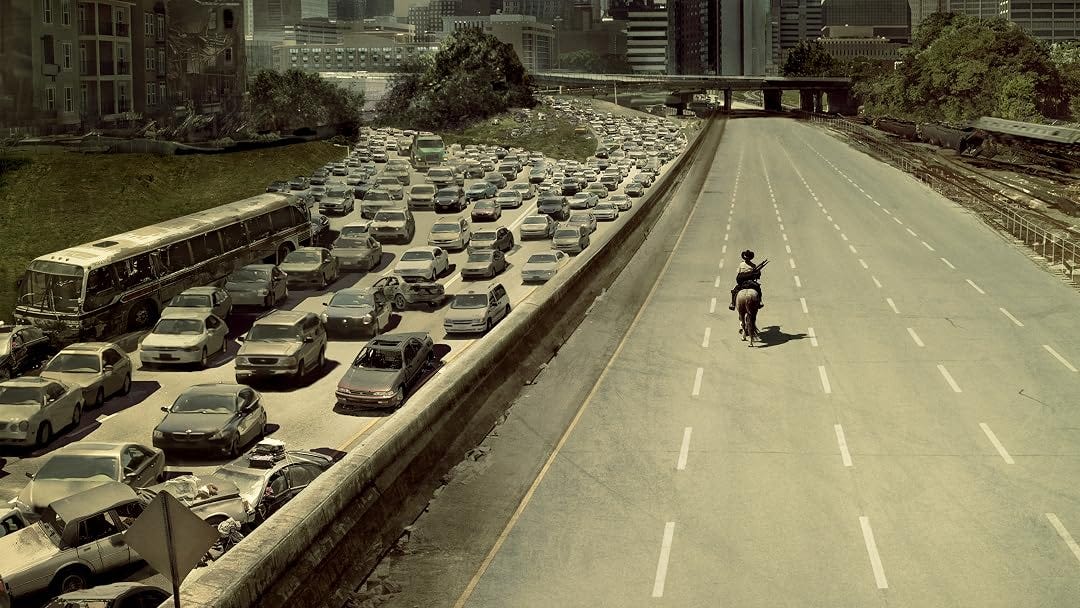
Instead, watching it calmed me down. I noticed it’s always been a recurring theme in the horror shows and movies I loved to rewatch. I’m not a fan of slasher or gory horror. The horror movies I like are not just spooky but also sinister; the settings are surreal and dreamlike; they make liberal use of liminal spaces and ambient lighting, have a handful of characters, and a slow but steadily progressing plot.
These characteristics might make someone who isn’t a fan of the genre uncomfortable, but I find it extremely relaxing. The dominating presence of liminal spaces is what my mind subconsciously latched onto the most.
When I’m dealing with burnout, overstimulation, and overwhelm, my mind wants reprieve. It wants to be desolate and have only a few characters dancing around in there; it wants the lighting low and ambient; it wants to process as little information as possible. My mind wants to be a liminal space.
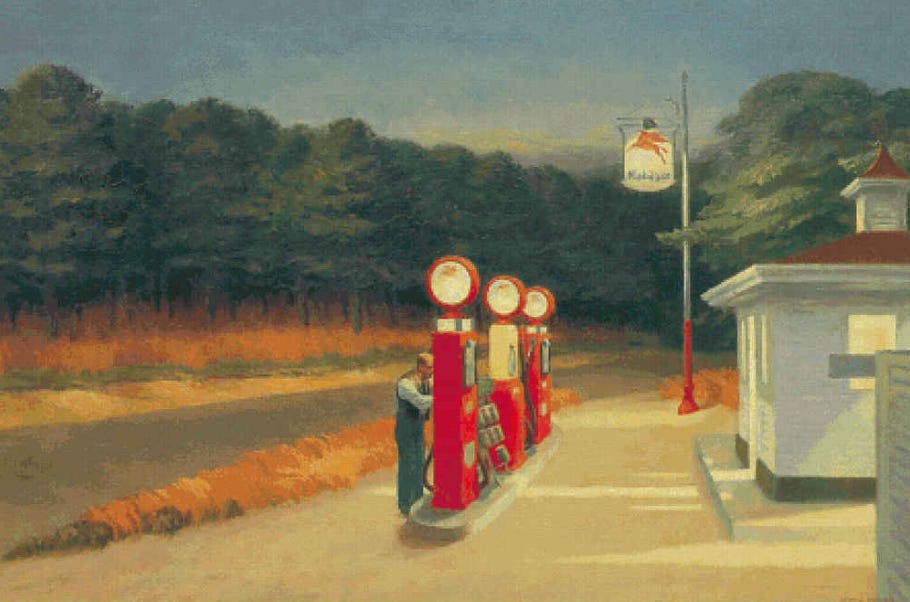
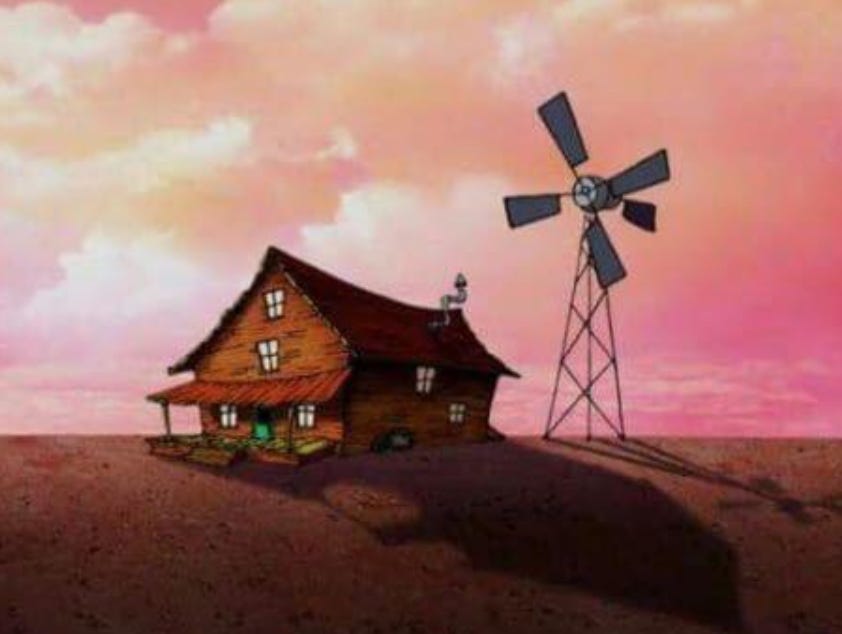
Liminal space is defined as a state of being in between. A transitional space, phase, or feeling. It’s the feeling of being awake when everyone is asleep, exploring an abandoned building, or happening upon a gas station in the middle of the desert. It’s Courage the Cowardly Dog’s house in the middle of Nowhere. These spaces translate a feeling of freedom. No responsibilities, no stimulation, no one watching you, and you’re watching no one. A clear mind.
Horror movies often reflect the cultural fears and anxieties of their time. During and after the COVID pandemic, for instance, apocalyptic themes and end-of-the-world narratives became prominent in cinema. Think of all the TV and movies that have come out since 2019: The Last of Us, Knock at the Cabin, Leave the World Behind, Paradise. More end-of-the-world movies keep coming out, but I think we’re entering an era where horror cinema reflects a new kind of fear.
When Backrooms came out, I wasn’t sure what to expect. I knew I would see it because it was an A24-produced horror starring my fellow Nigerian Chiwetel Ejiofor.
I think Backrooms reflects a current cultural fear: the fear and fatigue of overstimulation. The fear of being constantly reachable. Backrooms represents a collective desire to shut it all out and be in a liminal space that’s removed from the hustle and bustle of the world.
The spooky, uncanny, surreal, and liminal provide levity from the real dread of everyday life. It represents the liberation of the human mind from societal expectations and from logic. It allows us to escape.
It’s not just The Walking Dead (earlier seasons) and Backrooms. Some other cinema that provides this feeling for me includes The Nightmare Before Christmas, Coraline, The Twilight Zone (original), Supernatural, and some of the works of David Lynch. David Lynch was known to treat cinema as intuitive and sensory first before anything else. He wanted people to feel his movies.
Even the recent Dune movies have a sparseness to the way they play with space and forced perspective. Despite its majesty and grandiosity, Dune makes me feel relaxed.
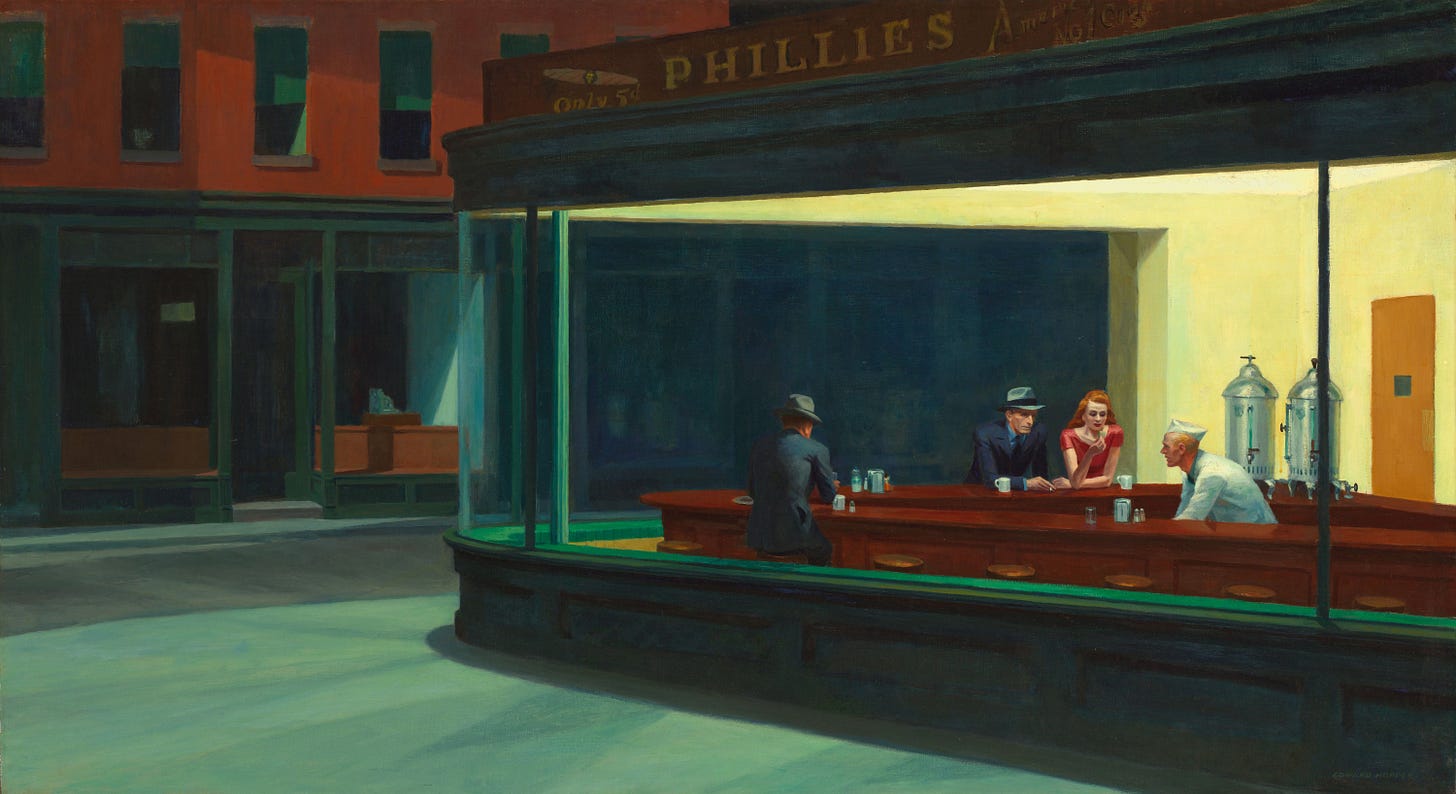
The comfort of liminal space can come from other places too, not just cinema. Edward Hopper’s paintings are famous for depicting this feeling. Nighthawks, Gas, Early Sunday Morning, and New York Movie—which hangs in my apartment—show you the beauty of a slow life. They show spaces that make you appreciate their emptiness as their defining trait.
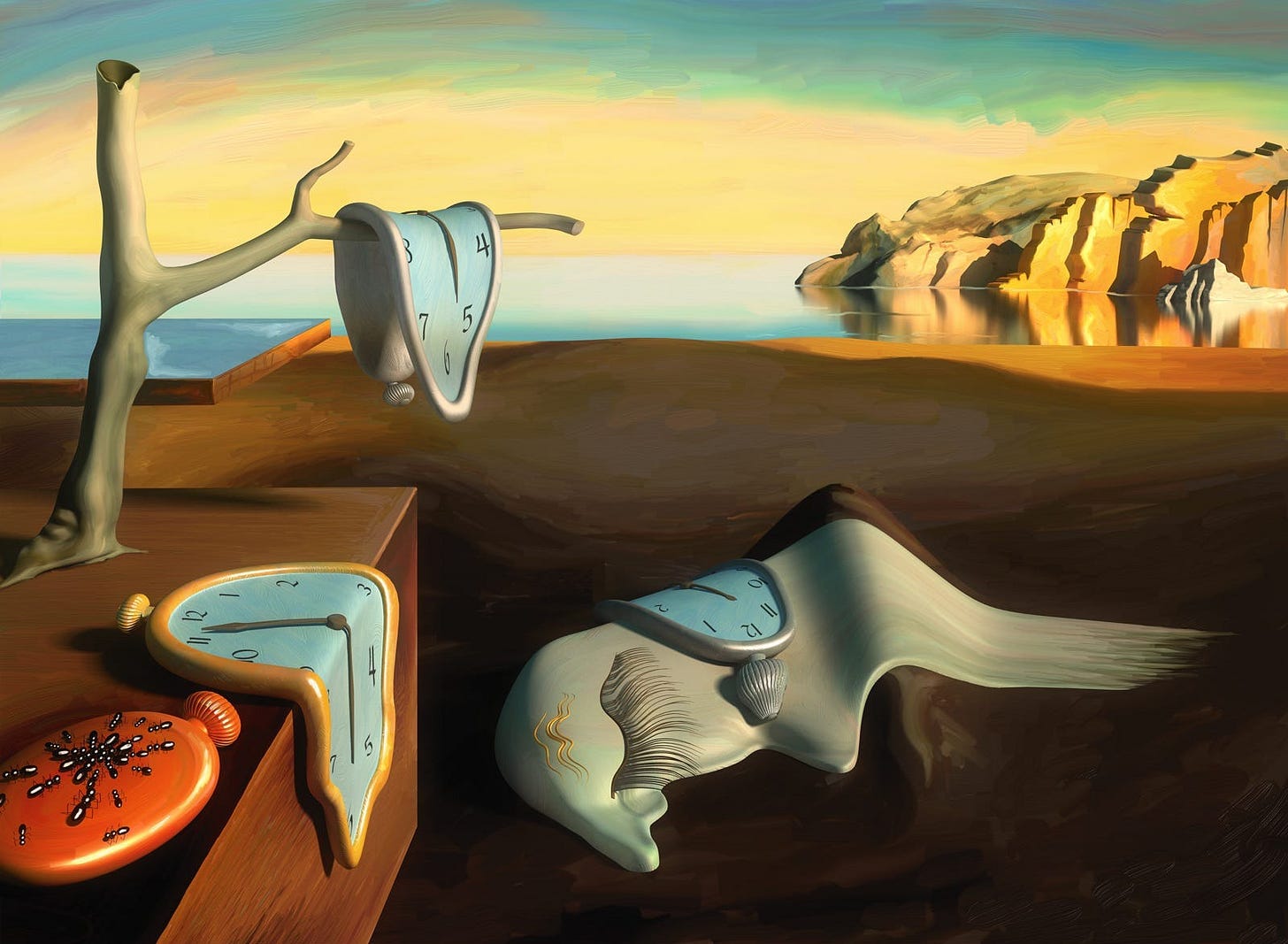
Salvador Dali’s The Persistence of Memory is a key work in surrealism and explores the subconscious, dreams, and repressed desires. Yes to all that, and also looking at The Persistence of Memory permits my mind to shut up.
A lot of movies these days move so quickly. Older movies had a cadence to them that permitted you to be fully present. Maybe it’s just nostalgia for simpler times, but the beginning of Jaws is so tranquil it’s almost therapeutic.
In many movies today, you barely have time to settle in before characters start giving theatrical, exaggerated monologues and dialogues at a speed comparable to Busta Rhymes raps. I found it impossible to watch Ben Affleck’s recent movie, Animals, for this reason, and the Running Man remake moved so fast it felt like poison to my nervous system. I shut it off and turned on Courage the Cowardly Dog.
This article was originally published on my Substack— Wandering, Not Lost.
If you love this piece, please subscribe and share it with a friend. One little act of sharing can help me grow and reach more people with my words.
You can subscribe here. (You don’t have to have the Substack app to subscribe or receive my emails).
