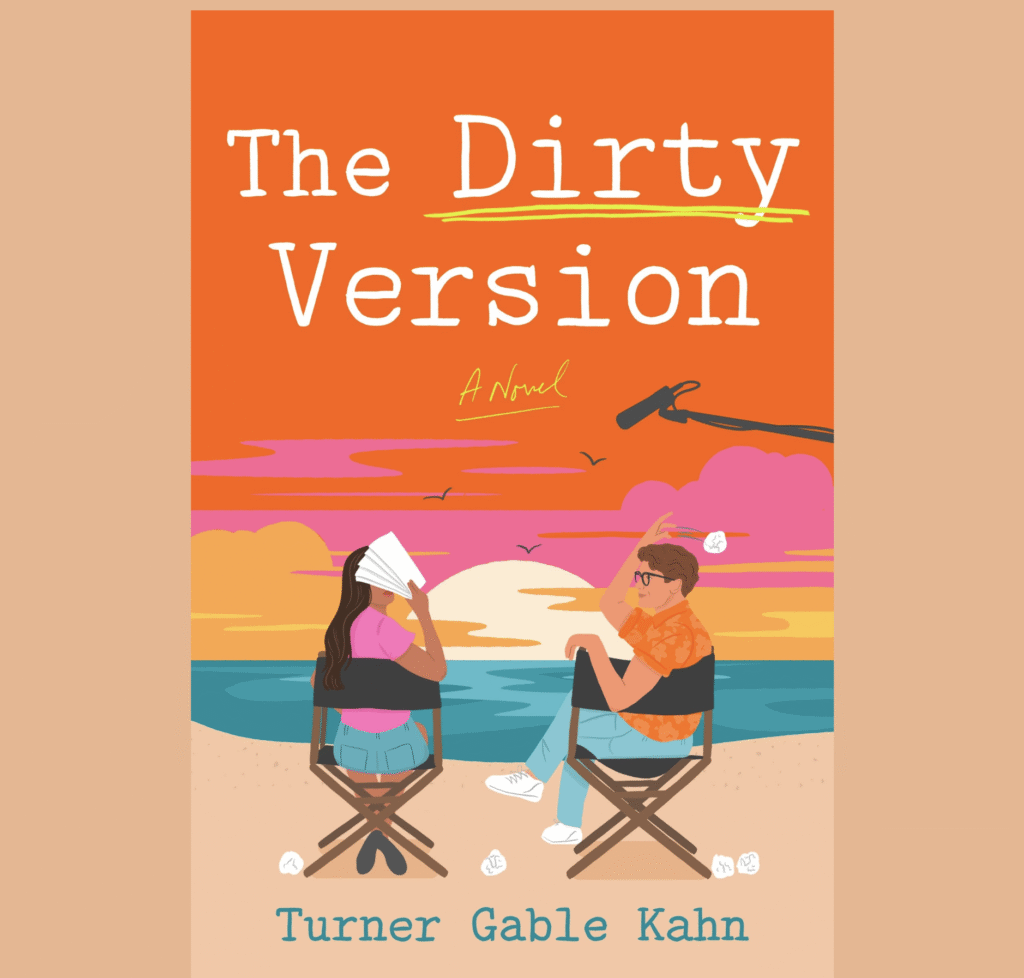
THE DIRTY VERSION is a lush, fun, and deeply feminist closed-door contemporary romance. Beth O’Leary calls it “Bold, smart, with a heroine I loved and lots of interesting things to say about sex, art and entertainment,” while Booklist praises it as “a splendidly sensual enemies-to-lovers romance with a compellingly complicated heroine.”
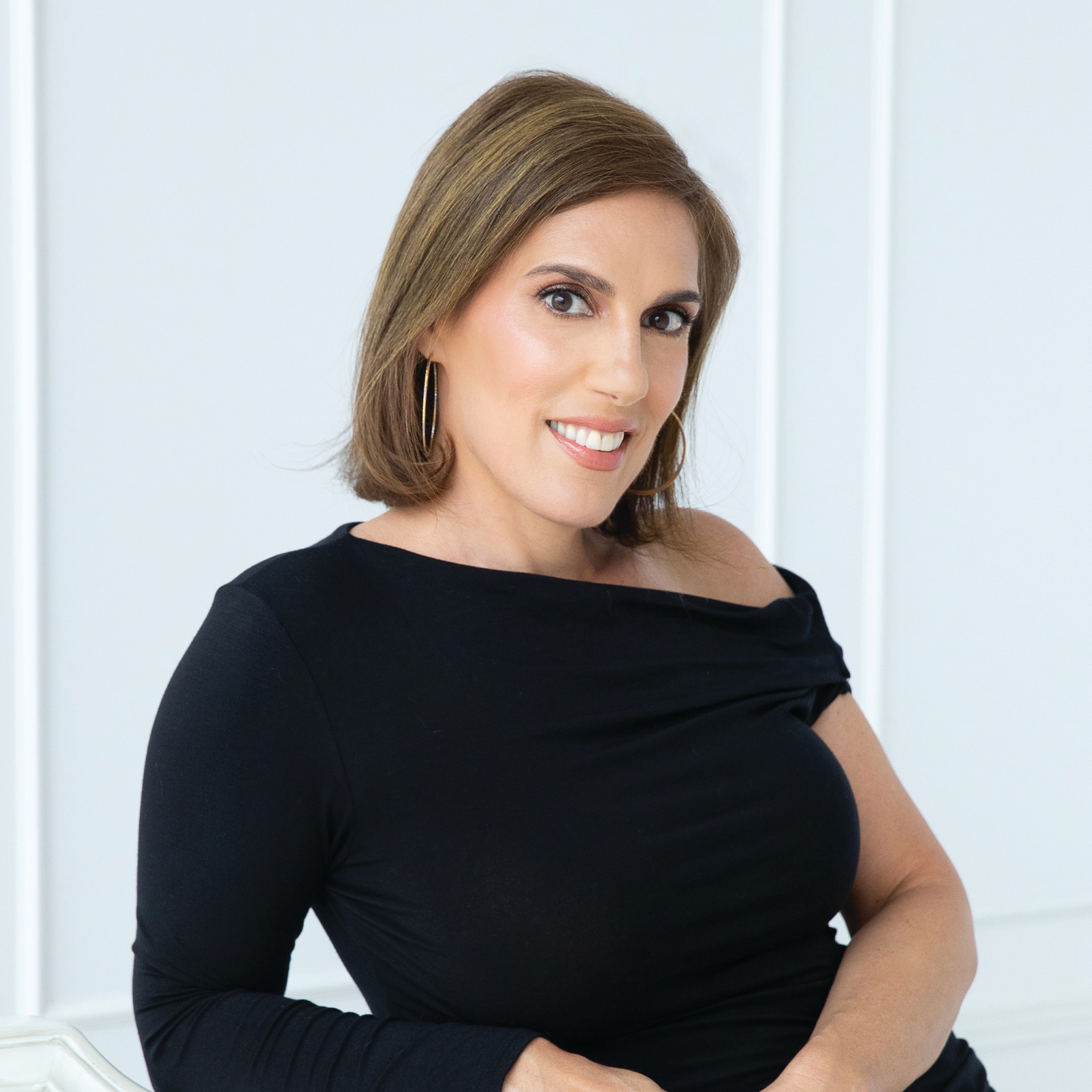
Author Turner Gable Kahn describes the book as “a love story about creative control as foreplay. I wanted to write a heroine who is angry, funny, vulnerable, and real — and a romantic hero who’s hot because of his emotional intelligence. And fine, also those abs.”
Read an excerpt from the novel below.

Argumentatively, Caleb sat forward. “Let’s establish something,
okay? Eileen McCormack’s novel is exponentially more graphic than
anything I arranged for its adaptation.” He repeated the author’s
name: “Eileen McCormack. Who is a woman. Who also was a
consultant for the show.”
Tash refused it. “The fact that she’s a woman doesn’t matter. Au-
thorship doesn’t give anyone immunity.”
“Of course it matters!” Caleb threw his hands up in exasperation.
“You’ve been telling me it matters since we met!” He ticked it off
on his fingers: “You’re the writer. You’re a woman. Your
perspective has more meaningful insight than mine. You’re the one
with the giant chip on her shoulder.”
It was Tash’s turn to blink now.
“A woman wrote those rape scenes, Tash. Female actors
decided of their own free will to take those roles. I did my best with
the script translation, and Stacy ran a tight set—but we don’t have the
ability to change the basics of a story, and I don’t think the
material would have been better off with someone else. At the
end of the day, my responsibility first goes to the actors.” He
challenged her: “Ask them about their experience on
Transtempora. I promise you they’ll say it was safe and we were
thoughtful. Those sequences are not my jam—they’re gutting.
Transtempora was the toughest job we’ve ever done.”
The thoroughness of his pushback destabilized Tash’s
mental footing; she realized how many assumptions she’d
made about Caleb and his craft.
After awkward moments, she could only acquiesce.
She tried to rebound with some semblance of humor. “My
chip isn’t giant. It’s normal-sized.”
But Caleb pressed on, not letting her escape. “Can I ask you
something?” With elbows on his knees and blue eyes earnest.
“You’re angry, right? That’s obvious—but lots of times, anger is
really about fear. What are you afraid of?”
She scoffed, disliking his impression, even if it was fairly on
point. “What, now you’re a therapist?”
“Kind of.” Amazingly, he embraced it. “Film is personal. Acting
and directing are personal. My job is to create consensus between
all our invested parties. If you’re angry and scared, I want to
understand so I can help you. Just get it on the table.”
“Get it on the table?” At the very least, Tash admired his bravery.
“You want to know what I’m afraid of?”
He point-blanked back at her. “Yes. That’s why I asked.”
“Okay.” Tash approached the floodgates. At his own risk, she
slowly unlocked the latch. “Well. I’m afraid I wrote this one great
thing. It just happens to speak to a lot of women, some of whom
participate in online forums that track this adaptation’s every
move. In addition, actual feminist scholars read The Colony.
Netanya Cortez blurbed my book, Caleb—the high priestess of
feminism—”
“I know who she is.” His eyes narrowed.
Tash felt her words become emphatic. “Then you also know the
stakes. I don’t want to fail these people. I don’t want to fail Janelle,
who helped devise the premise—which is a love letter to every
woman in my life who’s sick of feeling powerless, and a flaming Yelp
review of every man who’s let me down. I don’t want to have to
compromise. This is my stamp on the world, and I want it to stay
strong.”
Her face had heated scarlet.
Maybe Caleb really was a therapist.
Because Tash clung to The Colony—maybe too much. She’d put
it ahead of Zach, and ahead of her parents. She equated its virtue to
her self-worth. She didn’t know if that was normal, and she’d
never stopped to care. But now, across the glass-walled, jungle-
lit interior of her writing studio, she could also admit it made her
overly defensive. She could see herself instigating conflict with
Caleb, who maybe didn’t even want to fight.
He just listened, absorbing her rant.
He didn’t break eye contact. “Tash, this is teamwork. We’ll move
forward in a way that addresses your concerns.” He studied her.
“What does Janelle say about the scenes Braverman has asked
for?”
Therapist and strategist—this guy was perceptive, roping in
Janelle. He knew she was the guru and the best friend. He knew
her opinion meant the world to Tash.
Tash allowed herself an exhale, feeling the defusing of her bomb.
“Janelle says feminism takes all forms. She says it’s important to
get The Colony to a wider audience, where its ideas can enter a
more public forum.”
Actually, Janelle had said “lube it up”—but Tash was
paraphrasing. Then she apologized for the second time that
morning, noting the pattern. Self-referentially: “She also says I
shouldn’t fuck this up by offending my intimacy translator.” Tash
would need to keep reminding herself not every exchange had to be a duel.
Caleb cracked a small smile, letting her slightly off the hook.
“Well, that would be a nice first step. The second step might be for
you to give me a real shot.” He pinned her with a benchmark: “I’m
willing to use everything you just said as our guidelines for
working together. We can even ask Janelle to test-read our
scenes before we submit.”
The mangrove outside suddenly seemed filled with olive
branches. Tash smelled a peace pipe. But before she could reach
for it, Caleb snatched it back.
“It’d be even better if you could meet me in the middle. I meant
what I said about making this a safe space, but it has to go both
ways. We need to respect each other’s intentions. From now on, for
real—I don’t want to be the target of your personal attacks.”
Tash met his frank stare. She gathered up the many spears
she’d thrown at him, and the evidence of his disarming patience.
She glanced to the giant chip on her shoulder, considering where
she might, tem- porarily, stash it away.
She stuck her hand out, touching him for the first time. “Okay, Rafferty.
You have a deal.”
Once Tash agreed to Caleb’s revamped terms, they returned to
dialing up sensuality, to Noab and Hewett and the forbidden, and
to illicit moods.
They returned to the garden apartment for the next three days,
side by side in its lounge. Tash kept it all business—she buckled
down, she was serious, no more personal attacks. She gave in to
Caleb’s creative methodology, following his instruction. His tactics
for assembling The Colony’s screen strokes differed vastly from
the way she’d written the book.
Instead of adding words, Caleb pushed Tash to distill them,
stripping the scene to its essence, identifying emotion beneath
the surface, then translating it into the vocabulary of muscle and
sweat and skin.
“This is our chance at stage direction—we want to spoon-
feed Ram evocative physical detail. It’s the closest you’ll get to
creative control, Tash—which is why it’s so important. Braverman
is always more receptive when the input is visually lush.”
“‘Visually lush’?” Tash took a break from her scene notes,
throwing Caleb an impressed curve of her mouth. “How poetic.”
He glanced up from the grid of storyboards he’d laid out on the
sisal rug. “Is it? I guess that’s what happens when you spend so
much time behind the scenes. Every department has a different
lingo—to get through to them, you have to change the way you talk.”
He knelt, swapping one sequence for another. “For example,
right now you and I are speaking Creative Genius—but wait until
you hear me talk Marketing.” Caleb raised playful eyebrows.
“That’s the real poetry.”
“I’m sure.” Tash fizzed with the coltish energy bouncing off the
apartment’s walls. It had expanded seamlessly, filling the void…
Get a copy of The Dirty Version.
ABOUT THE AUTHOR: